Dinner Plate
- Dinner Plate
Explore Further
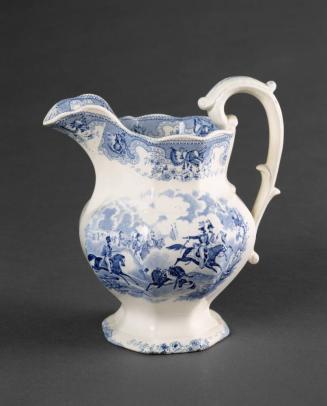
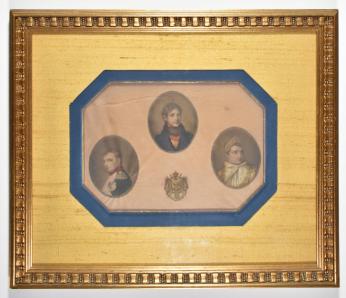
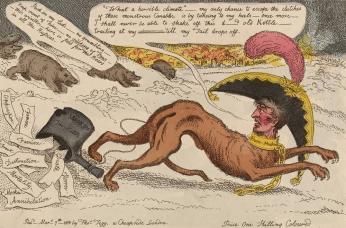
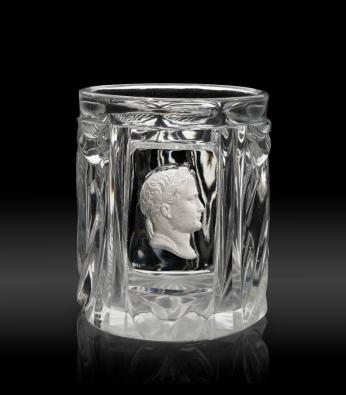
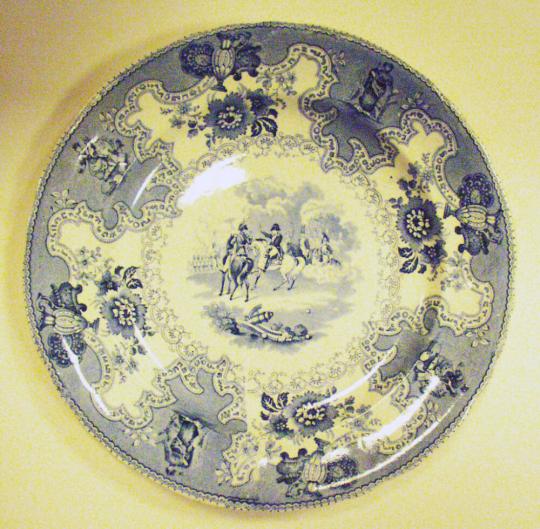
Featuring a dynamic scene of Napoleon Bonaparte astride a white horse and leading his troops in battle, this plate testifies to the interest in the Napoleonic Wars and in Napoleon as a person, which pervaded European and American thought during the early 19th century. The plate is part of an important series of ceramics depicting scenes from Napoleon’s military campaigns. Though some scenes in the series are labeled with the names of the battles they depict, this scene is one of several unnamed battles. Likely based on French prints of the day, this pattern has been attributed to Charles James Mason & Co. since a number of examples marked with the firm’s name exist. Charles James Mason is best known as the original patent holder for ironstone, which he submitted in 1813. Despite the popularity of that material, the company continued to produce other types of earthenware, like the pearlware this plate is made of, throughout its history.
The Napoleon series’ similarity to the Texian Campaigne pattern is widely noted. Though, as is the case with this plate, the pattern names are often marked on the reverse, the two can be easily distinguished based on differences in their border designs. Where the Texian Campaigne border uses images of the Roman goddess Ceres exclusively, the Napoleon border alternates between Ceres and another classical female figure. Furthermore, the war trophies, which surmount the floral reserves in the Texian Campaigne border, have been replaced by classical ewers, a shield, and a lidded coffer. Like Texian Campaigne wares, the Napoleon series was available in an assortment of colors, including blue, green, red, brown, pink, and purple.
ProvenanceLeila and Henri Gadbois, Houston; given to MFAH, 2005.
Inscriptions, Signatures and Marks
Cataloguing data may change with further research.
If you have questions about this work of art or the MFAH Online Collection please contact us.