sliderarrowCloseMenushare_facebookshare_instagramshare_xshare_linkedinshare_threadsshare_shareshare_tranditionalshare_calendarshare_emailicon_threadsconnect_facebookconnect_instagramconnect_xconnect_youtubeconnect_atbtn_arrowhamburger-x
Skip to main content
Menu Collections
CultureEnglish
Titles
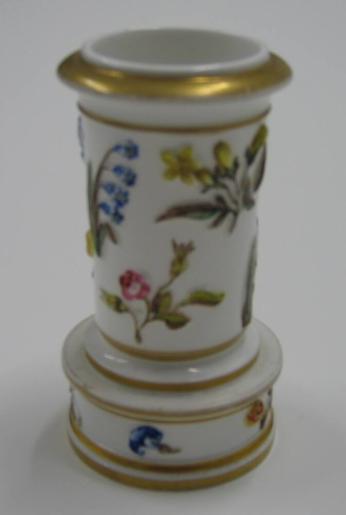
  • Matchpot (one of a pair)
  • Spill Vase (one of a pair)
Datec. 1810–1830
Made inStoke-on-Trent, England
MediumPorcelain (bone china) with transfer print and gilding
Dimensions4 3/16 × 2 1/4 in. diameter (10.6 × 5.7 cm)
Credit LineThe Bayou Bend Collection, gift of William J. Hill
Object numberB.2005.20.1
Current Location
Bayou Bend Collection and Gardens
Chillman Parlor
Exposé

Explore Further

Department
Bayou Bend
Object Type
Description

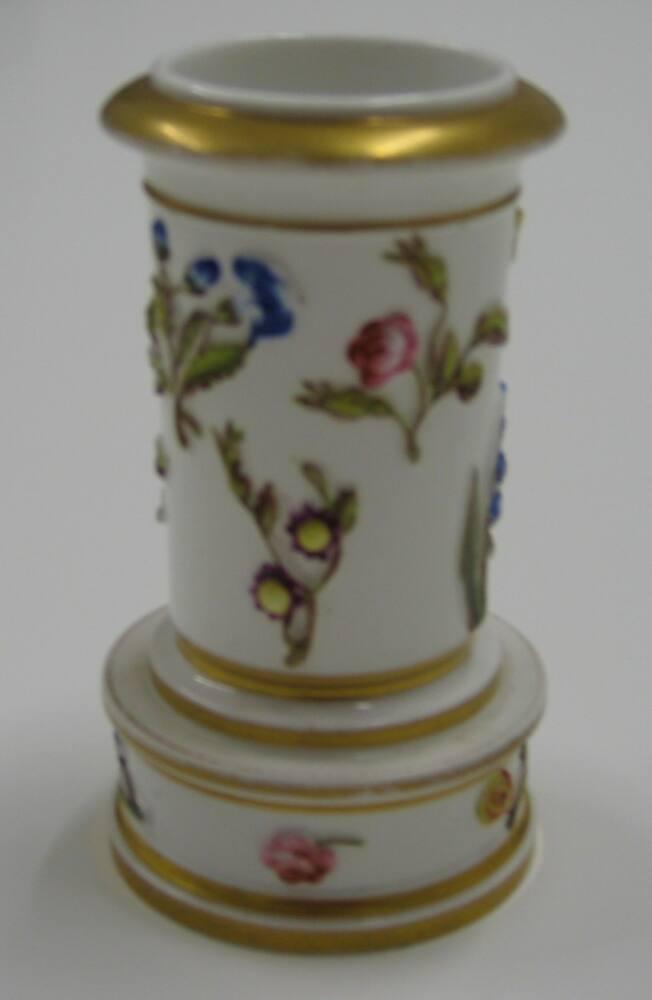
This pair of vases, with their delicate, applied-molded floral decoration, realistic hand-painting, and gilt highlights, was created by the Spode Pottery and Porcelain Factory around the first quarter of the 19th century. The factory was founded by Josiah Spode, who had entered the potter’s trade under Thomas Whieldon by 1749. Following a series of partnerships, Spode founded his own pottery in 1776. His son, called Josiah Spode II by historians, opened a London retail shop selling earthenware, porcelain, and glass in 1778, thus making the wares available to a broader populace. Spode II returned to Stoke-on-Trent to manage the pottery upon his father’s death in 1797. The Spode firm is best known for having perfected the formula for bone porcelain.

Illustrated as shape number 109 in Spode’s 1820 Shape Book, objects of this type were called “Pedestal Matchpots” in the period. The shape appeared before the invention of strike-to-light matches in 1827. Matchpots were designed to hold wooden splints, sometimes also called spills, which were used to light fires. Other manufactories called the form a spill vase, a term Spode later adopted, presumably to avoid confusion once sulphur matches became widely available. Likely created as part of a garniture, the pair of matchpots would have created a symmetrical display atop a mantel.

Though most examples of Spode porcelain are marked with a pattern number, these matchpots are not. Therefore, the name of this unusual, applied molded floral pattern remains unidentified.


ProvenanceWilliam J. Hill (1934–2018), Houston; given to MFAH, 2005.
Inscriptions, Signatures and Marks
Stamped in red on the underside: SPODE

Cataloguing data may change with further research.

If you have questions about this work of art or the MFAH Online Collection please contact us.

Matchpot (one of a pair)
Spode Pottery and Porcelain Factory
c. 1810–1830
Porcelain (bone china) with gilding and enamel
B.2005.20.2
scan from file photograph
Spode Pottery and Porcelain Factory
c. 1805–1810
Porcelain (bone china) with bat-printed decoration and gilding
B.77.1.1-.29
38-piece Dessert Service
Spode Pottery and Porcelain Factory
c. 1810
Lead-glazed earthenware (creamware) with enamel and gilding
B.72.107.1-.35
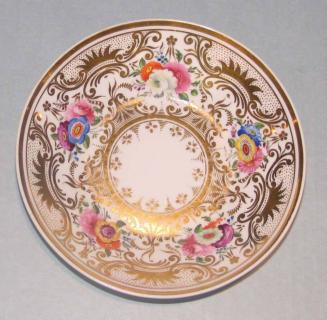
Saucer (part of a 38-piece tea set)
New Hall Porcelain Factory
c. 1820
Porcelain (bone china) with enamel and gilding
B.79.59.9
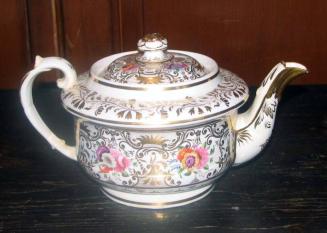
Teapot (part of a 38-piece tea set)
New Hall Porcelain Factory
c. 1820
Porcelain (bone china) with enamel and gilding
B.79.59.1.A,.B
Saucer (part of a 38-piece tea set)
New Hall Porcelain Factory
c. 1820
Porcelain (bone china) with enamel and gilding
B.79.59.8
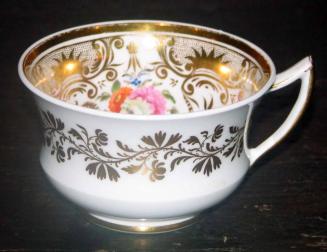
Teacup (part of a 38-piece tea set)
New Hall Porcelain Factory
c. 1820
Porcelain (bone china) with enamel and gilding
B.79.59.20
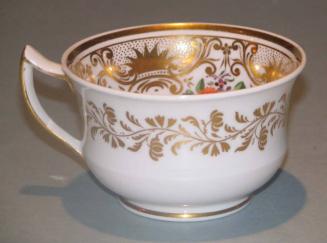
Teacup (part of a 38-piece tea set)
New Hall Porcelain Factory
c. 1820
Porcelain (bone china) with enamel and gilding
B.79.59.21
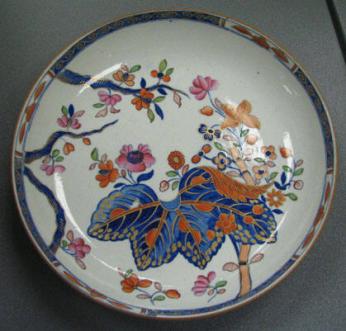
Dish
Spode Pottery and Porcelain Factory
c.1820
Porcelain
2008.493
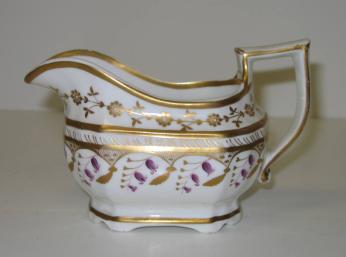
Creamer
Spode Pottery and Porcelain Factory
c. 1800
Soft-paste porcelain
71.159
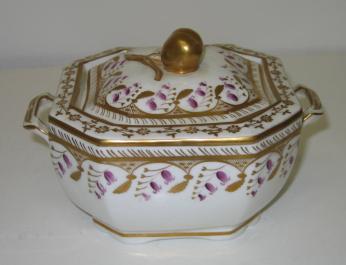
Sugar Bowl and Cover
Spode Pottery and Porcelain Factory
c. 1800
Soft-paste porcelain
71.158.A,.B
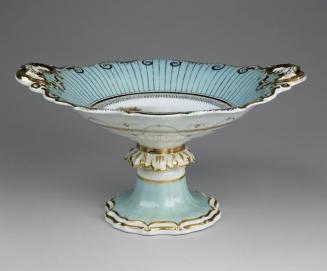
Compote
Upper Hanley China Works
c. 1840–1848
Porcelain (bone china) with enamel and gilding
B.2002.3
Spode Pottery and Porcelain Factory