sliderarrowCloseMenushare_facebookshare_instagramshare_xshare_linkedinshare_threadsshare_shareshare_tranditionalshare_calendarshare_emailicon_threadsconnect_facebookconnect_instagramconnect_xconnect_youtubeconnect_atbtn_arrowhamburger-x
Skip to main content
Menu Collections
CultureIndian
Titles
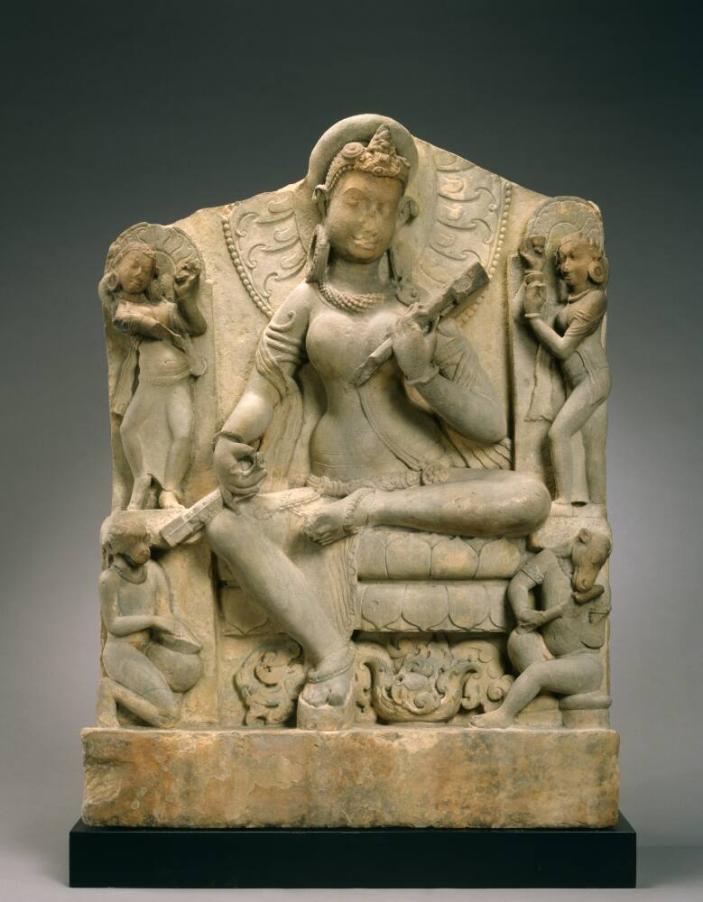
  • Sarasvati
Date6th century
Made inIndia
MediumSandstone
DimensionsOverall: 33 1/8 × 24 1/2 × 7 3/4 in. (84.2 × 62.2 × 19.7 cm)
Credit LineMuseum purchase funded by "One Great Night in November, 2004"; "Polo in India: A Great Tradition," with funds from Sesh and Prabha Bala, Dr. and Mrs. A. P. Raghuthaman, Mr. and Mrs. Ashok Rao; the Friends of Asian Art, with funds from Mr. and Mrs. Edward R. Allen III, Mr. and Mrs. Louis Daly, Mr. and Mrs. John Goodman, Dr. and Mrs. Ninan Mathew, Drs. Usha and Kumara Peddamatham, Isabel B. and Wallace S. Wilson, and the Caroline Wiess Law Foundation; and additional funds from Terry Huffington and Ralph Ernest Dittman, Dr. and Mrs. Peter Sullivan, and Mr. and Mrs. Gordon E. Nicklos, by exchange
Object number2004.1661
Current Location
The Caroline Wiess Law Building
106M Lovett Gallery
Exposé

Explore Further

Department
Asian Art
Object Type
Description

Sarasvati is the Hindu goddess of learning and the arts. She is the consort of Brahma, the god of creation and source of all knowledge. Because Brahma created Sarasvati from his own flesh and blood, she is often regarded as the embodiment of knowledge and creativity. 


This sandstone representation draws attention to Sarasvati's importance as the divine patron of the arts. As in many depictions, she is seen here seated upon a sacred lotus blossom, the symbol of supreme knowledge and spiritual truth. An avid musician, Sarasvati is shown playing a musical instrument called a veena. The neck and base of the veena can still be seen on this figure, though the body of the instrument is no longer intact. 


Sarasvati is depicted with a serene smile as she sways gently to the music. Her attendants dance around her, one accompanying Sarasvati on a flute and another on a small drum. Because of Sarasvati's importance in all things intellectual and artistic, many students, scholars, poets, musicians, painters, and sculptors look to her for guidance and support.


ProvenanceResearch Ongoing
Exhibition History"The Sensuous Immortals: A Selection of Sculptures from the Pan-Asian Collection," Pratapaditya Pal, Los Angeles County Museum of Art, 1977. Distrubuted by MIT press, Cambridge, Massachusetts. Reproduced on p. 40.

Cataloguing data may change with further research.

If you have questions about this work of art or the MFAH Online Collection please contact us.
Nagini
Unknown Indian
9th Century
Sandstone
90.510
Shiva Nataraja
Unknown Indian
late 19th–early 20th century
Bronze
2025.227
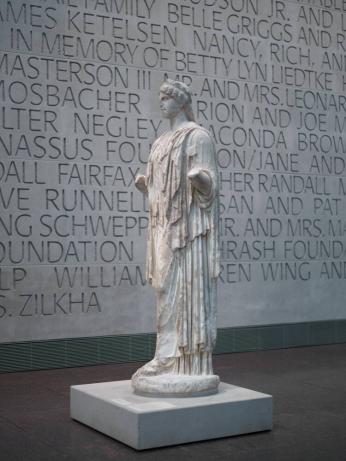
Goddess
Unknown Roman
1–100 AD
Marble
74.253
Vessel with Mythological Scene of an Old God and the Moon Goddess Holding a Coatimundi
Unknown Central and South American
600–900 AD
Earthenware with slip
2014.83
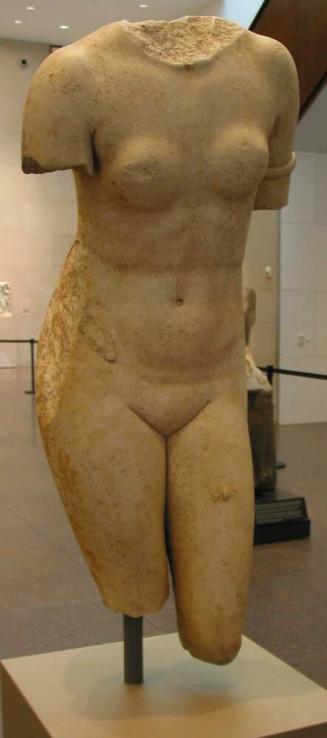
Torso of Aphrodite
Unknown Roman
100 BC–100 AD
Marble
2004.1614
Image provided by donor.
Rahul Jain
2004–2007
Silk
2025.63
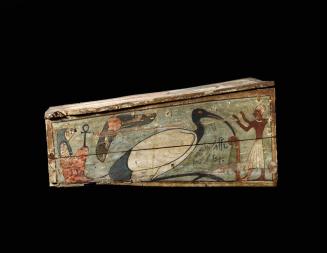
Painted Wooden Coffin of the Sacred Ibis of Thoth
Unknown Egyptian
332–30 BC
Wood with polychrome decoration
2008.808
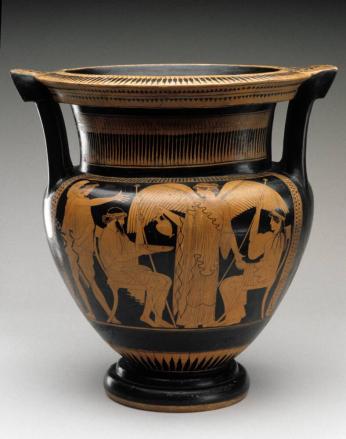
Red Figure Column Krater
Syriskos Painter
480–460 BC
Terracotta with slip
2003.136
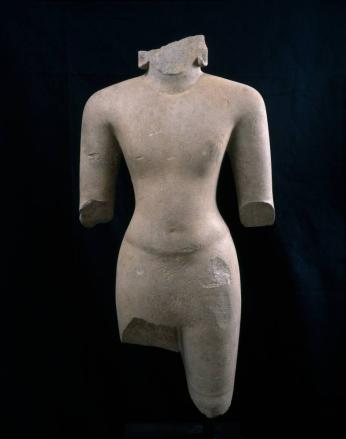
Torso of a Deity
Unknown
late 20th century
Sandstone
99.1
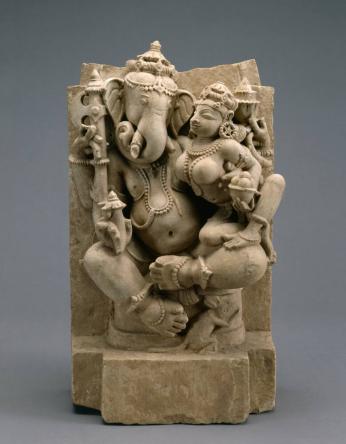
Ganesh and Siddhi
Unknown Indian
10th-11th century
Buff sandstone
99.310
Diana
Frederick William MacMonnies
1889–90 (this version cast in 1917)
Bronze, lost-wax cast
98.251
Unknown Indian