sliderarrowCloseMenushare_facebookshare_instagramshare_xshare_linkedinshare_threadsshare_shareshare_tranditionalshare_calendarshare_emailicon_threadsconnect_facebookconnect_instagramconnect_xconnect_youtubeconnect_atbtn_arrowhamburger-x
Skip to main content
Menu Collections
CultureEnglish
Titles
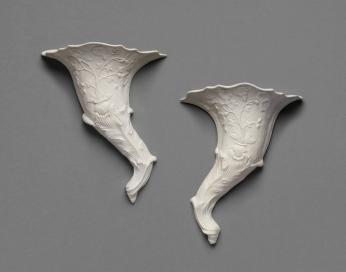
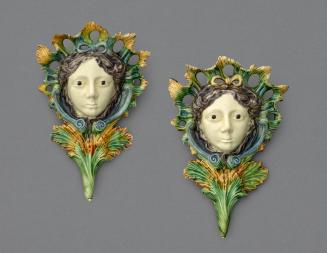
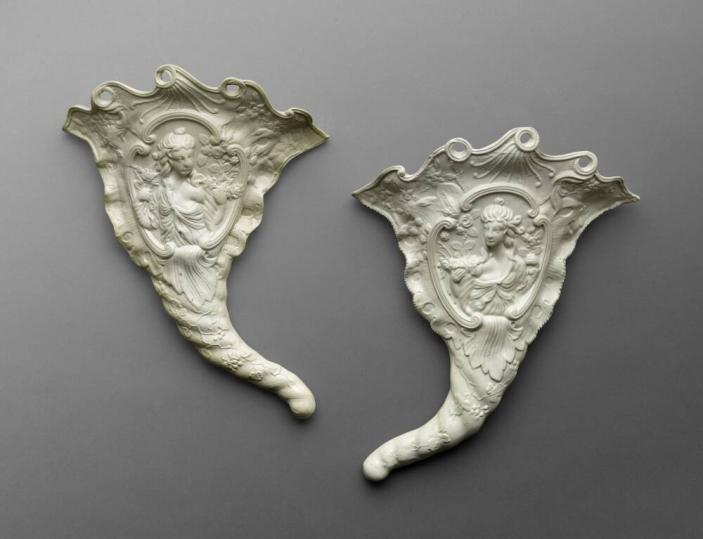
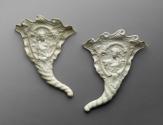
  • Pair of Wall Pockets
Datec. 1755–1775
Made inEngland
MediumSalt-glazed stoneware
Dimensions.1: 10 7/8 × 8 1/4 × 3 3/8 in. (27.6 × 21 × 8.5 cm)
.2: 11 × 8 7/8 × 3 3/8 in. (27.9 × 22.5 × 8.6 cm)
Credit LineThe Bayou Bend Collection, gift of Lavinia Boyd
Object numberB.2019.13.1,.2
Current Location
Bayou Bend Collection and Gardens
Newport Room
Exposé

Explore Further

Department
Bayou Bend
Object Type
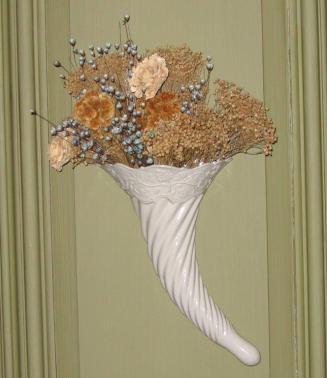
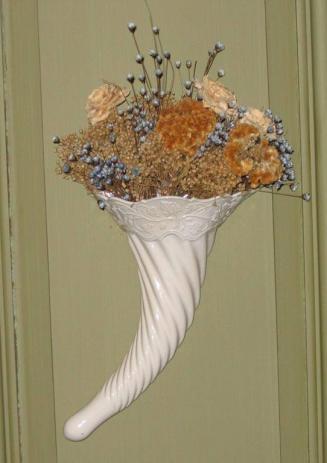
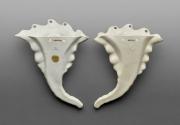
DescriptionIn the 1700s and 1800s in England, wall pockets portraying Flora, the Roman goddess of flowers, like the ones here, were sometimes known as “cornucopias” or “flower horns.” Reaching the height of their popularity in the mid-1700s during the rococo period, these ornamental objects probably hung in dining rooms and parlors. Sold in pairs, wall pockets often were asymmetrical shapes with right- and left-handed examples. They were usually constructed of molded fronts joined to flat, slab backs, which were pierced twice to allow for a wire for hanging. England produced a wider arrange of wall pockets than any other country. They were manufactured in delftware, creamware, pearlware, green-glazed earthenware, soft-paste porcelain, and white salt-glazed stoneware. With the rise of neoclassicism in the 1770s, the popularity of the form began to fade.
ProvenanceLavinia Boyd, Brenham, Texas; given to MFAH, 2019.
Published References Edwards, Diana, and Rodney Hampson. White Salt-Glazed Stoneware of the British Isles. Woodbridge, Suffolk: Antique Collectors’ Club, 2005. Grigsby, Leslie B. “Let’s Vase It! Revisiting Once-Popular Flower Containers.” Antiques and Fine Art (Autumn 2015), p. 175, fig. 3. Lange, Amanda E. “English Ceramic Wall Pockets.” Ars Ceramica 15 (1998/1999): 38–47. Lange, Amanda E. Delftware at Historic Deerfield 1600–1800. Deerfield, MA: Historic Deerfield, 2001. Pillement, Jean, and Robert Sayer. The Ladies Amusement: Or, Whole Art of Japanning Made Easy, Illustrated in Upwards of 1500 Different Designs on 200 Copper Plates. London: Printed at the Golden-Buck, 1762; 2nd ed., Boston, 1959. Teller, Barbara Gorely. “Ceramics in Providence, 1750–1800: An Inventory Survey.” The Magazine Antiques 94, no. 4 (October 1968): 575. Inscriptions, Signatures and Marks
[no inscriptions]
.2 - Verso: Sticker label in pen and ink, center: SALT GLAZE / HAWKINS / £370

Cataloguing data may change with further research.

If you have questions about this work of art or the MFAH Online Collection please contact us.

Pair of Wall Pockets
Unknown English
c. 1755–1775
Salt-glazed stoneware
B.2019.16.1,.2
Wall Pocket (one of a pair)
Unknown English
c. 1755–1770
Salt-glazed stoneware
B.56.101.2
Wall Pocket (one of a pair)
Unknown English
c. 1755–1770
Salt-glazed stoneware
B.56.101.1
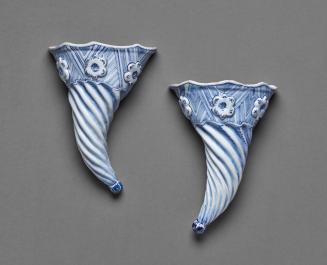
Pair of Wall Pockets
Unknown English
c. 1755–1775
Tin-glazed earthenware (delftware)
B.2019.15.1,.2
Pair of Wall Pockets
Thomas Whieldon
c. 1755–1775
Lead-glazed earthenware (creamware)
B.56.111.1,.2
scan from file photograph
Unknown English
c. 1755–1770
Salt-glazed stoneware
B.56.14.1
scan from file photograph
Unknown English
c. 1755–1770
Salt-glazed stoneware
B.56.14.2
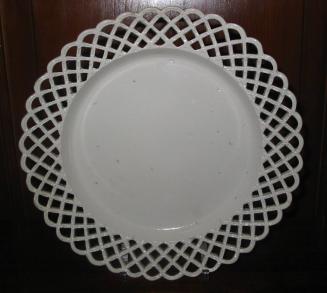
Dinner Plate
Unknown English
c. 1756–1763
Salt-glazed stoneware
B.56.44
Dinner Plate
Unknown English
c. 1755–1770
Salt-glazed stoneware
B.56.38
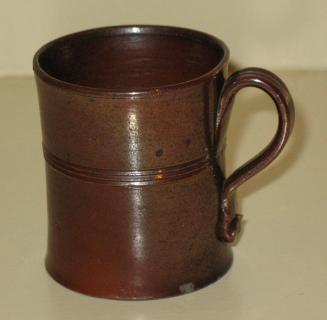
Mug
Unknown English
c. 1710–1720
Salt-glazed stoneware
B.85.17
Dish
Unknown English
c. 1750–1770
Salt-glazed stoneware
B.59.108
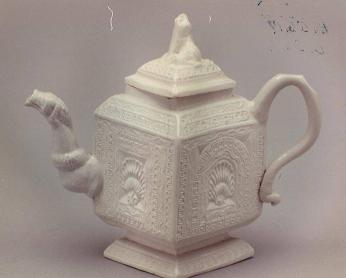
scan from file photograph
Unknown English
c. 1745–1755
Salt-glazed stoneware
B.59.48.A,.B
Unknown English