Porringer
- Porringer
Explore Further
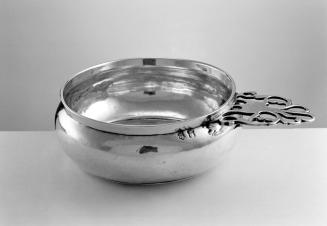
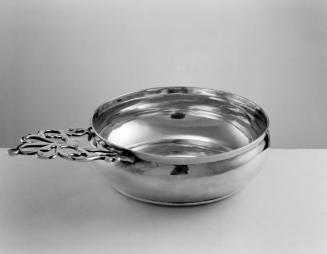
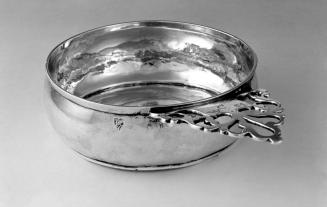
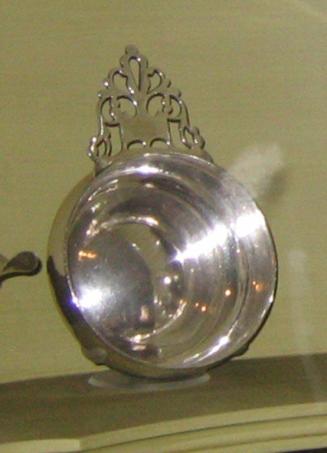
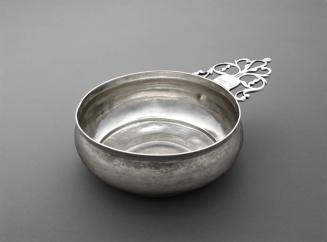
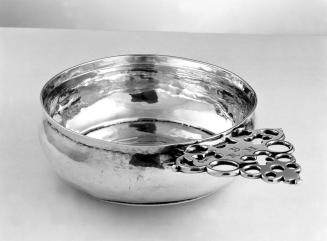
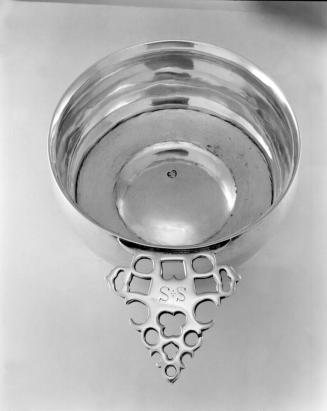
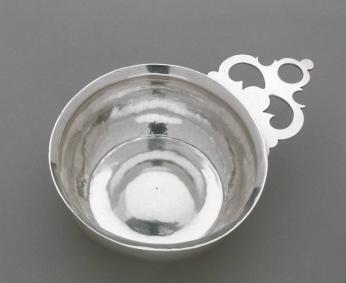
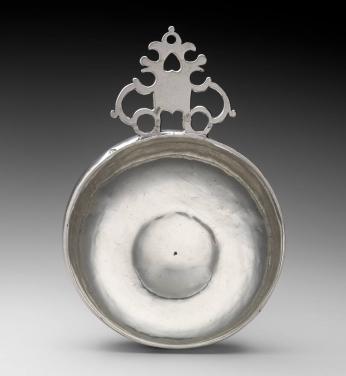
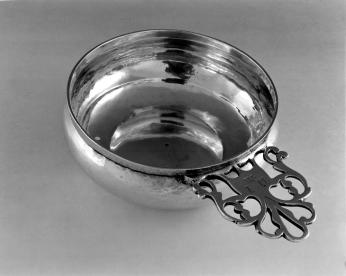
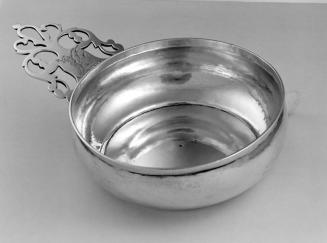
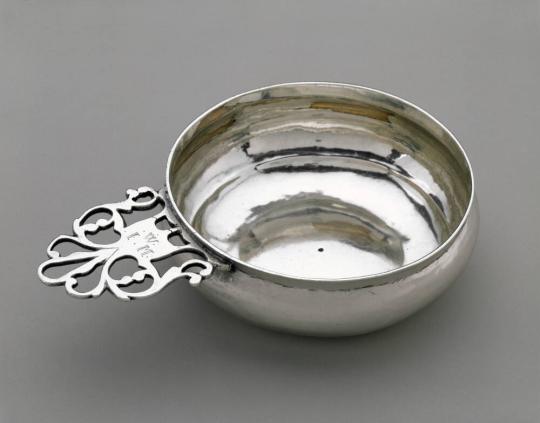
The keyhole-handle porringer was first produced during the 1720s and in time superseded all other patterns. John Dixwell was among the first to adopt the design. Characteristic of the earliest castings are the double arches, where the handle and bowl join.
Technical notes: The bowl is raised, and the handle cast. There is no indication of a center point.
Related examples: Parke-Bernet Galleries, New York, sale 995, October 21,1948, lot 118; Antiques 118 (July 1980), p. 91; Levy Gallery 1986, p. 32.
Book excerpt: David B. Warren, Michael K. Brown, Elizabeth Ann Coleman, and Emily Ballew Neff. American Decorative Arts and Paintings in the Bayou Bend Collection. Houston: Princeton Univ. Press, 1998.
ProvenanceBy descent through the Williams family, Portsmouth, New Hampshire; purchased by [James Graham and Sons, New York, 1961]; purchased by Miss Ima Hogg, 1961; given to MFAH, by 1966.
Published References The Magazine Antiques 79 (June 1961), p. 505; Warren, David B. Bayou Bend: American Furniture, Paintings and Silver from the Bayou Bend Collection. Houston: Museum of Fine Arts, Houston; Boston: New York Graphic Society, 1975, p. 157, no. 294; Kane, Patricia E., ed. Colonial Massachusetts Silversmiths and Jewelers: A Biographical Dictionary Based on the Notes of Francis Hill Bigelow and John Marshall Phillips. New Haven: Yale University Art Gallery, 1998, p. 380. Inscriptions, Signatures and Marks
Cataloguing data may change with further research.
If you have questions about this work of art or the MFAH Online Collection please contact us.