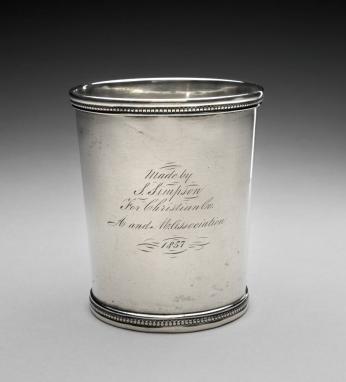
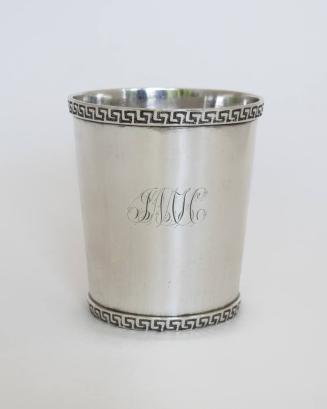
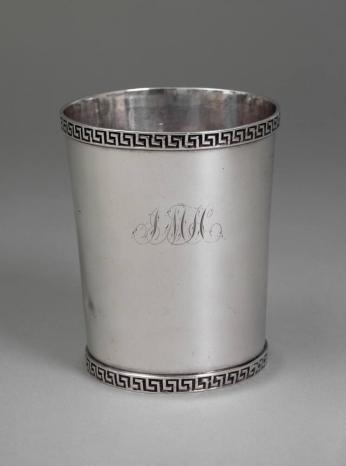
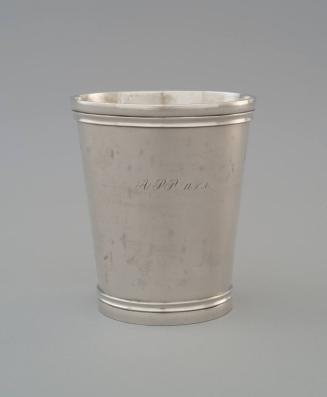
Tumbler
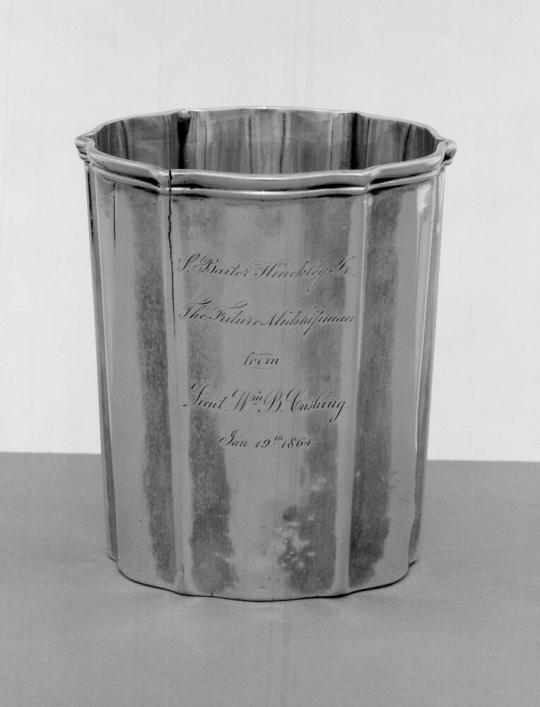

- Tumbler
Explore Further
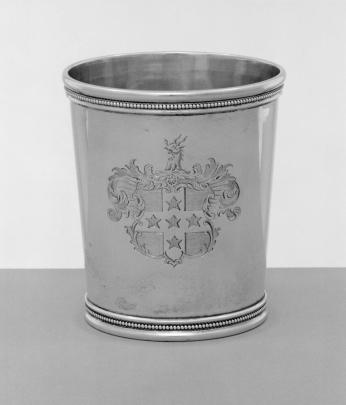
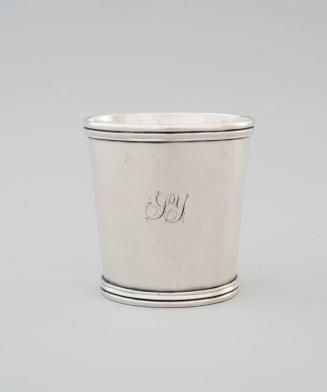
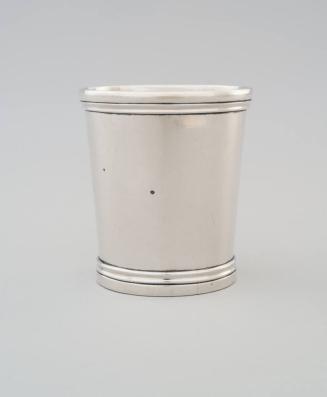
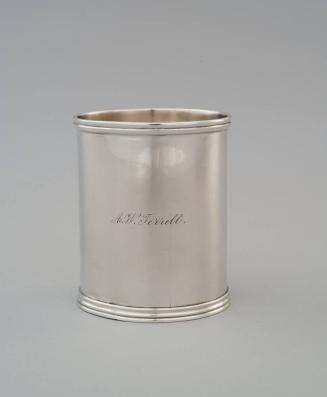
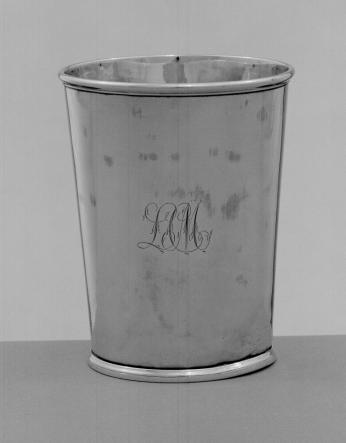
A cylindrical shape proved the most efficient and economical in the fabrication of a tumbler. Occasionally craftsmen altered the form, as exemplified by the Bayou Bend example. This serpentine contour, the most elegant of the variant forms, was introduced during the second half of the eighteenth century. It was adapted to a variety of media, including a teapot Paul Revere made as early as 1786
Technical notes: The body is a seamed construction.
Book excerpt: David B. Warren, Michael K. Brown, Elizabeth Ann Coleman, and Emily Ballew Neff. American Decorative Arts and Paintings in the Bayou Bend Collection. Houston: Princeton Univ. Press, 1998.
ProvenanceCommander William B. Cushing (1842–1874), Washington, D.C.; S. Baitor Hinckley, Jr.; Mr. and Mrs. Charles F. Montgomery, by 1968; purchased by [Ginsburg & Levy, New York]; purchased by Wunsch Americana Foundation; given to MFAH, 1974.
Published References Warren, David B. Southern Silver: An Exhibition of Silver Made in the South Prior to 1860. Exh. cat. Houston: Museum of Fine Arts, Houston, 1968, F-1-A; Mackie, Carey T., H. Parrott Bacot, and Charles L. Mackie. Crescent City Silver: An Exhibition of NineteenthCentury New Orleans Silver. Exh. cat. New Orleans: Historic New Orleans Collection, 1980, p. 92, no. 97. Inscriptions, Signatures and Marks
Cataloguing data may change with further research.
If you have questions about this work of art or the MFAH Online Collection please contact us.