
Side Chair
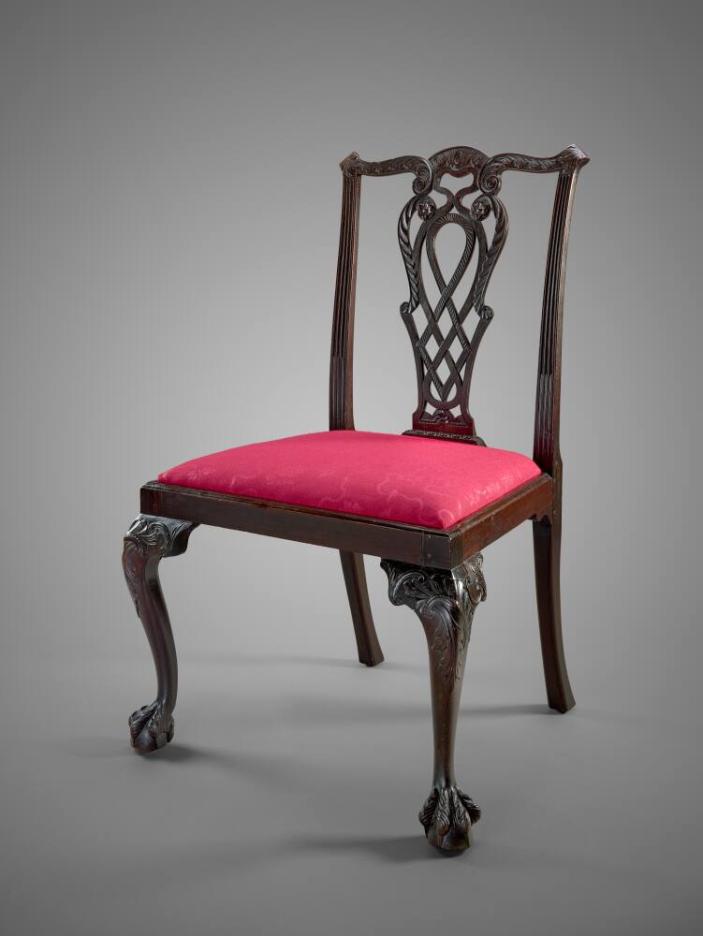
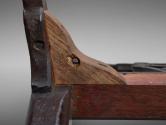
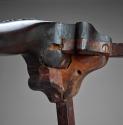
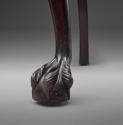
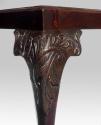
MakerPossibly by
James Graham(American, born Scotland, 1728–1808)American, born Scotland, 1728–1808
CultureAmerican
Titles
- Side Chair
Datec. 1755–1775
Made inBoston, Massachusetts, United States
MediumMahogany; soft maple and red oak
Dimensions37 1/2 × 24 1/2 × 22 3/4 in. (95.3 × 62.2 × 57.8 cm)
Credit LineThe Bayou Bend Collection, museum purchase funded by the Theta Charity Antiques Show and the Lora Jean Kilroy Accession Endowment
Object numberB.2017.18
Current Location
Bayou Bend Collection and Gardens
Chippendale Bedroom
On view
Explore Further
Department
Bayou BendObject Type
ProvenanceProbably Moses Gill (1733–1800), Massachusetts lieutenant governor, Boston and Princeton, Massachusetts; by descent in the Lazell and Mitchell families, Bridgewater, Massachusetts; […]; private owner, purchased at a sale in Weston, Massachusetts; consigned to Christie’s, New York, January 15, 1999, lot 701; purchased by private owner; consigned for private sale to Christie’s, New York; purchased by MFAH, 2017.
Exhibition History"Theta Charity Antiques Show," George R. Brown Convention Center, Houston, November 14–19, 2018.
Published References Luke Beckerdite, “Practices in Eighteenth-Century Boston,” in New England Furniture: Essays in Memory of Benno M. Forman (Boston: Society for the Preservation of New England Antiquities, 1987), pp. 123–124. Jonathan L. Fairbanks, Paul Revere’s Boston, 1735–1818: [Exhibition, April 18–October 12, 1975] (Boston: Department of American Decorative Arts and Sculpture, Museum of Fine Arts, 1975), cat. 53, 54, pp. 50–51. Courtney Leigh Harris, “An English Chair in Boston,” Antiques & Fine Art (Winter 2017): 122–124. Oswaldo Rodriguez Roque, American Furniture at Chipstone (Madison: University of Wisconsin Press, 1984), cat. 58, p. 134. Kemble Widmer, “A Scotsman, Thomas Chippendale, and the Green Dragon Tavern,” in Brock Jobe, Gerald W. R. Ward, and Lynn McCarthy, Boston Furniture, 1700–1900 (Boston: Colonial Society of Massachusetts, distributed by the University of Virginia Press, 2016), pp. 127–149. Widmer’s article is the most recent scholarship on a large group of furniture, including this chair, that he attributes to Scottish immigrant cabinetmaker James Graham (1728–1808). Widmer examines in detail the construction and carving techniques shared among the group and relates them to British practices that would have been well known to a craftsman trained in that tradition. Mary Ellen Hayward Yehia, “Ornamental Carving on Boston Furniture of the Chippendale Style,” in Boston Furniture of the Eighteenth Century: A Conference Held by the Colonial Society of Massachusetts, 11 and 12 May 1972 (Boston: Colonial Society of Massachusetts, 1974), pp. 201–204. Inscriptions, Signatures and Marks
[no inscriptions]
Numbered “V” on rear rail and “X” on slip-seat frame
Cataloguing data may change with further research.
If you have questions about this work of art or the MFAH Online Collection please contact us.
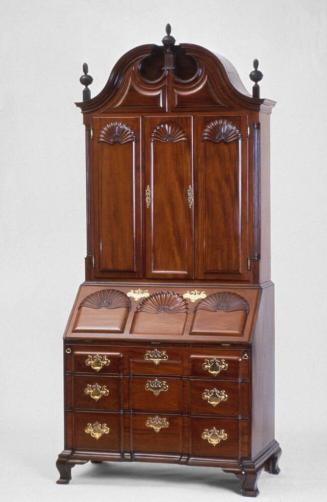
Unknown American
c. 1760–1790
Mahogany; eastern white pine, soft maple, chestnut, red cedar, poplar-aspen or cottonwood, white oak, and Spanish cedar or cedrela
B.69.22
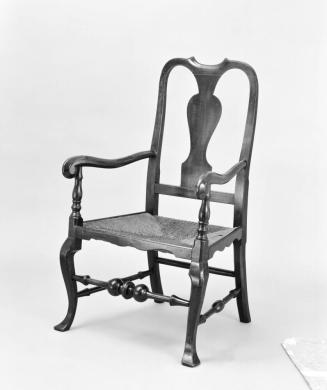
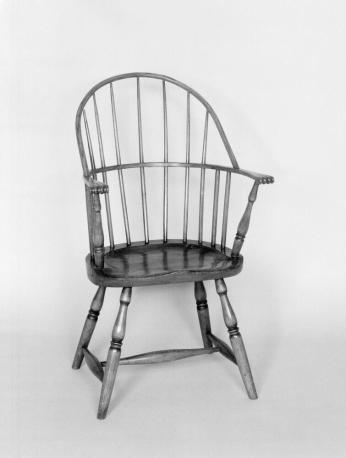
Unknown American
c. 1785–1800
Eastern white pine, soft maple, ash, red oak, and white oak
B.69.402
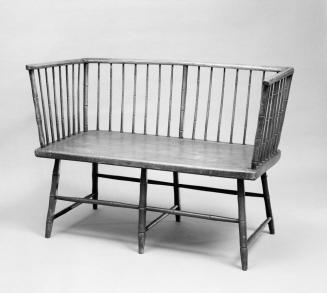
Unknown American
c. 1800–1820
Soft maple, red oak, white oak, and hickory. Old but not original green paint.
B.69.426
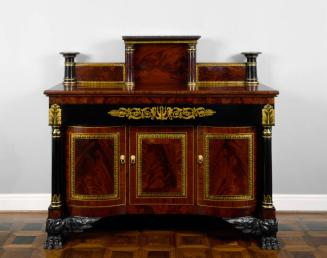
Joseph Meeks & Sons
c. 1825–1835
Gilded mahogany and mahogany veneer; white oak, soft maple, ash, eastern white pine, and yellow-poplar
B.67.6
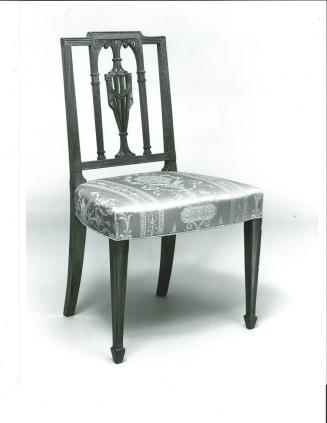
Unknown American
c. 1785–1820
Mahogany; eastern white pine, ash, red oak, sweetgum, and black cherry
B.60.37.6
Unknown American
c. 1785–1820
Mahogany; eastern white pine, ash, red oak, sweetgum, and black cherry
B.60.37.7
Unknown American
c. 1785–1820
Mahogany; eastern white pine, ash, red oak, sweetgum, and black cherry
B.60.37.8
Unknown American
c. 1785–1820
Mahogany; eastern white pine, ash, red oak, sweetgum, and black cherry
B.60.37.2
Unknown American
c. 1785–1820
Mahogany; eastern white pine, ash, red oak, sweetgum, and black cherry
B.60.37.3
Unknown American
c. 1785–1820
Mahogany; eastern white pine, ash, red oak, sweetgum, and black cherry
B.60.37.4