Imperial Portrait of the Emperor Caligula, God and Ruler
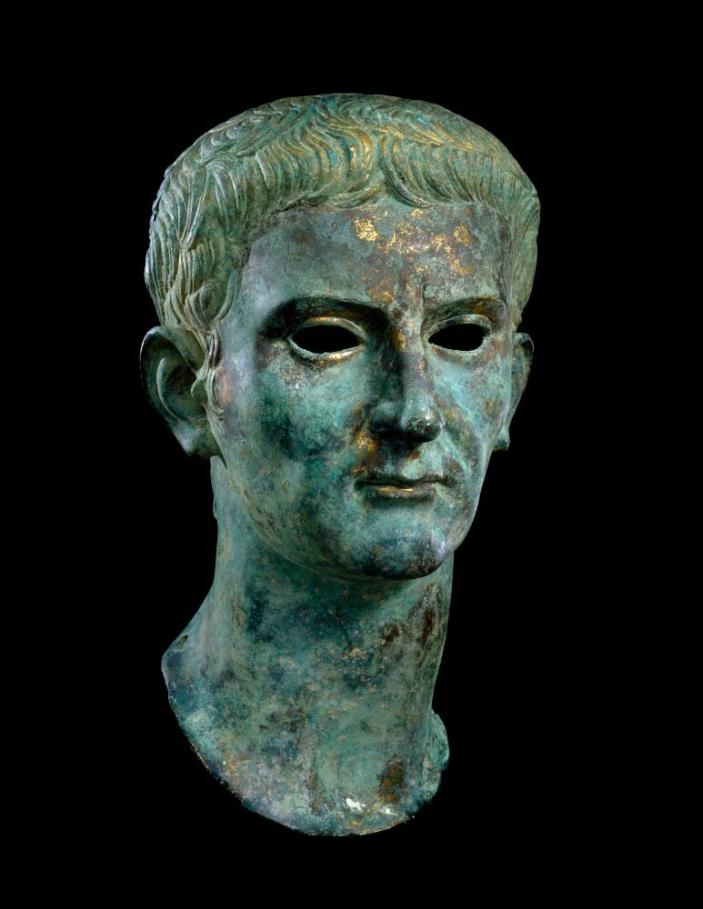
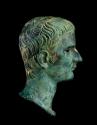
- Imperial Portrait of the Emperor Caligula, God and Ruler
Explore Further
Roman literature has established that Emperor Caligula proclaimed himself a god and erected a golden statue of himself in a temple in the Capitolium in Rome. According to his personal correspondence, he also intended to place his golden image in the great temple of Jerusalem. Ancient inscriptions provide evidence that cults worshipped Caligula as a god in eastern parts of the Roman Empire.
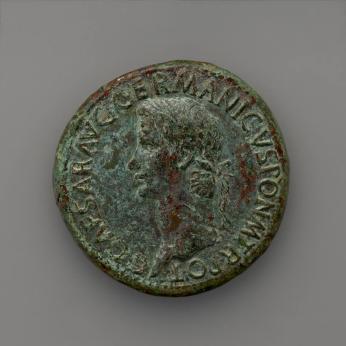
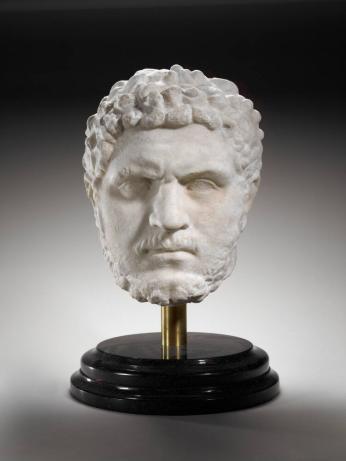
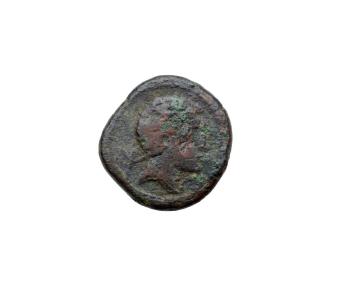
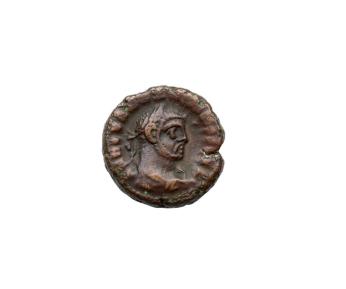
This magnificent gilt bronze head was probably the focal point of a temple. It combines the classic good looks of portraits of this ruler's dynasty with his own well-known features. In this way, Caligula distinguished himself as a descendent of gods and rulers as well as a god/ruler in his own right. Coins minted during his brief and turbulent reign do so as well. This bronze sestertius, an ancient Roman coin, clearly shows the likeness.
Roman
Sestertius with image of Caligula
37-41
Bronze
Gift of Isabel B. Wilson
ProvenancePrivate Collection, Germany, 1960s [1]. [Phoenix Ancient art, New York/Geneva, by 2001-2003] [2]; Purchased by the MFAH, 2003.
[1] Documents in the object file note that the head had been previously examined and lightly cleaned by Arnold Welker, goldsmith, in Frankfurt am Main, and was seen in the private collection by Dr. Walter Meier-Arendt in the early 1970’s (Object File).
[2] Loaned to MFAH in June 2002.
Published References "Solved: Identities of Two MFAH Masterworks No Longer a Mystery," MFAH Today. Houston: MFAH, Fall 2004. Pages 18-19. Vermeule, Cornelius. "Faces of Empire (Julius Caesar to Justinian), Part II, " The Celator: Journal of Ancient and Medieval Coinage, Vol. 19, No. 8 (August 2005). Page 24, figures 7 and 7A. Vermeule, Cornelius. "Faces of Empire (Julius Caesar to Justinian), Part II (b), " The Celator: Journal of Ancient and Medieval Coinage, Vol. 19, No. 9 (September 2005). Page 34, figures 7 and 7A.
Cataloguing data may change with further research.
If you have questions about this work of art or the MFAH Online Collection please contact us.