
Although John and Audrey Jones Beck had a predilection for Impressionist and Fauve (Wild Beasts) works, they also assembled a superb group of Neo-Impressionist paintings. A true masterpiece of this group is Paul Signac’s The Bonaventure Pine in Saint-Tropez, opus 239, 1893, which entered the Museum of Fine Arts, Houston, in 1974. Viewers have always marveled at the painstaking Divisionist or Pointillist technique with which Signac achieved the extraordinary luminosity and serenity of the canvas, and they are noticeably touched by the subject matter of the majestic lone tree. The painting stems from Signac’s early time in Saint-Tropez, still an idyllic fishing port on the Mediterranean when he discovered it in 1892. An avid sailor, he arrived there on his yacht Olympia in the middle of May, accompanied by his fiancé Berthe Roblès, whom he married later that year. His close friend and colleague Théophile van Rysselberghe was also part of his entourage.1 Like Signac, Van Rysselberghe had become a follower of Georges Seurat, who had initiated the Neo-Impressionist movement in the mid-1880s. His untimely death in 1891 was the catalyst for Signac’s departure from Paris. Enticed by the glowing reports his fellow Neo-Impressionist Henri Cross sent him from Cabasson, only twenty-five miles from Saint-Tropez, Signac sailed south in search of the warm Mediterranean light and a simpler life than Paris afforded him. From 1892 on, Signac spent part of each year in Saint-Tropez, but retained an apartment in Paris.2
A native Parisian, the young Signac was in the fortunate position to be allowed to choose painting as a career without parental opposition and wealthy enough not to have to live by his art. Refusing to take his baccalaureate exam necessary to pursue university studies, he insisted instead on becoming a painter.3 His inspiration was Claude Monet, whose works he saw in exhibitions in 1879, 1880, and 1883. Virtually without the benefit of academic instructions, he set out to produce Impressionist landscapes that clearly reflect Monet’s influence.4 However, it was his encounter with Georges Seurat in the summer of 1884 that would have the most decisive consequences for his artistic development. The two young painters—both still in their early twenties—quickly became close friends.5 The theories developed by Seurat, based on the scientific discoveries by Michel Eugène Chevreul and Ogden Rood,6 radically changed Signac’s perception of how to paint. He eagerly embraced Seurat’s lead in applying the Divisionist method of creating images through tiny dots of complimentary colors. Following Seurat’s death, Signac became the most ardent proponent of this method.
The Bonaventure Pine in Saint-Tropez, opus 239 is one of the first works Signac painted at Saint-Tropez, preceded only by a few views of the harbor and the figurative composition Women at the Well, Opus 238, 1892 (Musée d’Orsay). He made a preparatory sketch for this Beck Collection work that is today in the State Hermitage Museum in Saint Petersburg, Russia (fig. 64.1). Painted on a small board, this sketch was surely executed directly in front of the motif. The summary brush work is an indication of this, as is the less symmetrical shape of the tree’s canopy and the disposition of individual branches. Clearly, Signac’s objective was to concentrate on the isolated tree, leaving the background only roughed in. The final, much larger version was carried out in the studio. This stone pine, also known as umbrella or parasol pine, is highly stylized and painstakingly brushed in Signac’s distinct Divisionist technique. The dark green canopy—actually made up of closely spaced dark green and dark blue dots—sparkles with contrasting yellow and orange dots that highlight the umbrella-like clusters of needles characteristic of this species of pines. Signac’s insistence on the arabesque is noticeable in the overall structure of the canopy as well as in the larger branches jutting out from both sides of the trunk. This stylization has been seen as Signac’s reaction to Japanese art, especially Hokusai’s woodblock prints.7 While this influence is clearly noticeable, there is a musicality to Signac’s sense of form and balance that is entirely his own. Signac had set forth his thoughts about the analogies of music and Neo-Impressionist painting in his treatise D’Eugène Delacroix au Néo-Impressionisme, originally published in 1899, in which he equates the seven musical notes of a scale to the seven coloristic tones available to the Neo-Impressionist painter.8 In fact, as Robyn Roslak has pointed out, Signac’s habit of giving opus numbers to his paintings from 1887 to 1893, indicates that he saw them as comparable to musical compositions.9 Thanks to the strategically placed areas of sky shining through the canopy, which do not entirely follow what he had captured in the sketch, Signac has given the canopy a measure of lightness. Yet, it appears as a solid mass against the light sky, dominating the low hills beyond the bay that is dotted with sail boats. The tree’s isolation in this pleasant hilly landscape, its centralized position, and its almost symmetrical shape give it a majestic air.
Altogether, Signac has achieved a portrait of a tree, truly capturing its essence.10 It was undoubtedly a specific tree that Signac painted, an umbrella pine that is said to have stood “on the road to Saint-Tropez.”11 A southwestern area of Saint-Tropez is named Saint-Bonaventure, but whether it has any connection to this canvas is uncertain. According to Françoise Cachin, Signac concentrated mainly on the port and sites near his house La Ramada, located near the beach of Les Graniers, in his early days at Saint-Tropez.12 Signac had important forerunners in nineteenth-century French painting in this genre. The Barbizon School painters, starting with Camille Corot, produced numerous works featuring impressive trees, but the most prominent forerunner is Gustave Courbet’s The Oak at Flagey, 1862 (fig. 64.2), also known as The Vercingetorix Oak, that stood near the Courbet family farm in the village of Flagey, Doubs, in eastern France. The centuries-old tree, with its enormous trunk, is centered as is Signac’s The Bonaventure Pine in Saint-Tropez, opus 239, but its canopy is so large that it cannot be contained by the picture’s frame. Its association with Vercingetorix, the Gallic king who tried to overthrow Julius Caesar, is probably more symbolic than historically accurate, but nonetheless gives deeper meaning to a tree that is venerable for its resilience and longevity. It has been read as symbolic of Courbet’s stance against his critics and can be generalized as a symbol of man’s heroic stance in face of adversity. The tree’s symmetrical shape, the patches of sky shining through its branches, and its dominance over the landscape are elements also found in Signac’s composition. On the other hand, Claude Monet’s Bodmer Oak, Fontainebleau Forest, 1865 (fig. 64.3), an oak in the Forest of Fontainebleau named for the Swiss painter Karl Bodmer, which Monet painted in response to Courbet’s work, comes closer to Signac’s work stylistically. Clearly, the brilliant palette consisting of bright greens, yellow, and orange of Monet’s plein air work spoke directly to Signac. Although applied in a different fashion, these colors reappear in The Bonaventure Pine in Saint-Tropez, opus 239.
Interestingly, The Bonaventure Pine in Saint-Tropez, opus 239 is found in the background of Signac’s most important work from Saint-Tropez, In the Time of Harmony, 1894‒95 (fig. 64.4).13 This figural composition stands out in Signac’s oeuvre for its ambitious scale and its multilayered meanings that comprise his aesthetic as well as his political and social preoccupations.14 In this idyllic setting of a worker’s paradise, the large pine tree shelters two groups under its canopy: a group resting and a group dancing enthusiastically. The dancers evoke not only rustic customs that may still have been in place in the 1890s, but they also allude to ancient practices of venerating trees. The subtitle of the work, “The Golden Age has not passed; it is still to come,” allows for a wide scope of interpretations.
It is significant that Signac reused the image of the tree, a subject that seems to have fascinated him for years. He repeatedly painted umbrella pines for over a decade.15 They appear in several works, including Sailboats and Pines, 1896 (private collection), and Saint-Tropez, the Parasol Pines of Canoubiers, 1897 (Musée de l’Annonciade, Saint-Tropez), Saint-Tropez, Route de la Foux, 1897 (Worcester Art Museum, Massachusetts), and Le Pin Bertaud, 1900 (Sotheby’s New York, Auction 6/9/2020, lot 1015). In 1907, he returned to the subject with The Bay (Saint Tropez) in the collection of Mrs. Robert B. Mayer of Chicago and one last time with the spectacularly colorful Pine of Bertaud, painted in 1909 (Pushkin State Museum of Fine Arts, Moscow). In none of these depictions does Signac isolate the tree as he did in the Beck Collection work, where he truly sublimates this magnificent pine to a spiritual level. The Bonaventure Pine in Saint-Tropez, opus 329 must have held a special place in Signac’s heart. He gave the painting to Van Rysselberghe in exchange for his Paul Signac at the Helm of Olympia, 1896 (private collection),16 which may have recalled for both friends their exciting discovery of Saint-Tropez just a few years earlier, a discovery that significantly changed Signac’s life and art.
—Helga Kessler Aurisch
Notes
1. Françoise Cachin, Signac, Catalogue raisonné de l’oeuvre peint (Paris: Gallimard, 2000), 48, and Marina Ferretti Bocquillon, Signac, Les couleurs de l’eau, exh. cat. (Paris: Gallimard, 2013), 63.
2. John Leighton, “Out of Seurat’s Shadow: Signac, 1863‒1935, An Introduction,” in Marina Bocquillon-Ferretti, Anne Distel, John Leighton, and Susan Alyson Stein, Signac, 1863‒1935 (New York: Metropolitan Museum of Art, 2001), 14.
3. Leighton, “Out of Seurat’s Shadow”, 4.
4. Cachin, Signac, 11.
5. Leighton, “Out of Seurat’s Shadow”, 5‒6.
6. The pertinent publications that influenced Seurat and the Neo-Impressionists are
Michel Eugène Chevreul, Des Couleurs Et De Leurs Applications Aux Arts Industriels à l’Aide Des Cercles Chromatiques (Paris: J.B. Ballière, 1864), and Ogden Rood, Modern Chromatics, with Applications to Art and Industry (New York, D. Appleton and Company, 1879).
7. Albert Kostenevich, Hidden Treasures Revealed, Impressionist Masterpieces and other Important French Paintings Preserved by the State Hermitage Museum St. Petersburg (New York: Ministry of Culture of the Russian Federation, The State Hermitage Museum, St. Petersburg in association with H.N. Abrams, 1995), 214, and Cachin, Signac, 48‒49.
8. Paul Signac, D’Eugène Delacroix au Néo-Impressionnisme (Paris: Librairie Floury, 1939), 97.
9. Robyn Roslak, “Symphonic Seas, Oceans of Liberty: Paul Signac’s La Mer: Les Barques (Concarnau),” Nineteenth-century Art Worldwide, Spring 2005, vol. 4, no. 1, accessed May 28, 2024, https://www.19thc-artworldwide.org/spring05/symphonic-seas-oceans-of-liberty-paul-signacs-la-mer-les-barques-concarneau.
10. Marie Thérèse Lemoyne de Forges, Signac (Paris: Ministère d'état, affaires culturelles, 1964), 55.
11. Lemoyne de Forges, Signac, 55.
12. Cachin, Signac, 48.
13. Domenic Pietropaolo and Luca Somigli, eds., Modernism and Modernity in the Mediterranean World (Brooklyn: Legas, 2006), 264.
14. Bocquillon-Ferretti, Distel, Leighton, and Stein, Signac, 1863‒1935, 195.
15. Edgar Peters Bowron and Mary G. Morton, Masterworks of European Painting in the Museum of Fine Arts, Houston (Princeton: Princeton University Press, 2000), 184.
16. Bocquillon-Ferretti, “Signac and Van Rysselberghe, The Story of a Friendship, 1887‒1907,” Apollo, The International Magazine of the Arts, June 1998, 14.
The Bonaventure Pine in Saint-Tropez, opus 239
Bocquillon-Ferretti, Marina, and Françoise Cachin. P. Signac. Paris: A.D.A.G.P, 2003.
Bocquillon-Ferretti, Marina. Signac: les couleurs de l'eau. Exh. cat., Paris: Gallimard, 2013.
Bocquillon-Ferretti, Marina, and Pierre Curie. Signac: les harmonies colorées. Exh. cat., Brussels: Fonds Mercator, 2021.
Clement, Russell T., and Annick Houzé. Neo-Impressionist Painters : A Sourcebook on Georges Seurat, Camille Pissarro, Paul Signac, Théo Van Rysselberghe, Henri Edmond Cross, Charles Angrand, Maximilien Luce, and Albert Dubois-Pillet. Westport, Connecticut: Greenwood Press, 1999.
Distel, Anne. Signac: au temps d'harmonie. Paris: Réunion des musées nationaux, 2001.
Genty, Gilles, and Mary-Dailey Desmarais, eds. Signac and the Indépendants. Exh. cat., Paris: Hazan, 2020.
Homburg, Cornelia, Paul Smith, Laura D. Corey, Simon Kelly, Noelle C. Paulson, and Christopher Riopelle. Neo-Impressionism and the Dream of Realities: Painting, Poetry, Music. New Haven: Yale University Press in association with the Phillips Collection, Washington, D.C, 2014.
Kapos, Martha. The Post-Impressionists: A Retrospective. Exh. cat., New York: Hugh Lauter Levin Associates, 1993.
Ratliff, Floyd. Paul Signac and Color in Neo-Impressionism. New York: Rockefeller University Press, 1992.
Signac, Paul. D'Eugène Delacroix au Néo-Impressionnisme. Paris: Librairie Floury, 1939.
Signac, Paul. Jongkind. Paris: G. Crès & Cie, 1927.
[1] Belgian neo-impressionist painter (1862-1926) and co-founder of the Belgian avant-garde artistic circle “Les XX.”
[2] The work is noted as having been in the collection of “M. V. R.” [or Monsieur Van Rysselberghe] when loaned to the “Onzième exposition des Artistes Indépendants, April 9-May 26, 1895, cat. no. 1403 as “Le Gros Pin.”
[3] The work was lent to the 1963-1964 Louvre exhibition as cited; it was cat. no. 47 as “Le Pin sur la route de Saint-Tropez,” and “Docteur Jacques Caroli, Paris” was noted as the owner. The date of Caroli’s acquisition of the work is currently unknown.
Comparative Images
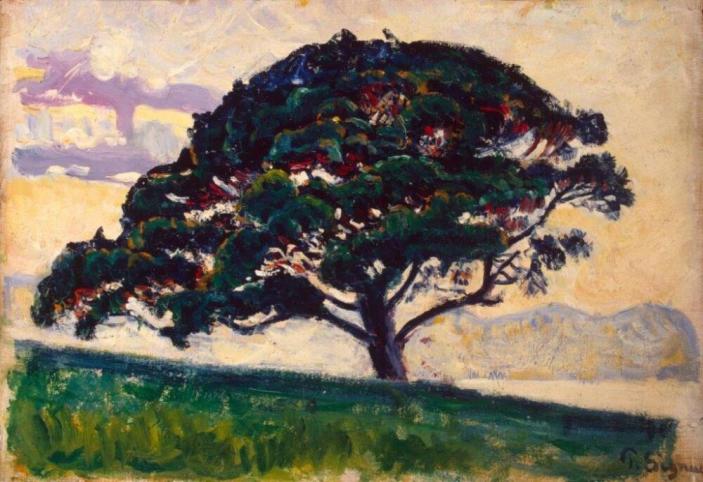
Fig. 64.1. Paul Signac, The Bonaventure Pine, sketch, State Hermitage Museum, Saint Petersburg.
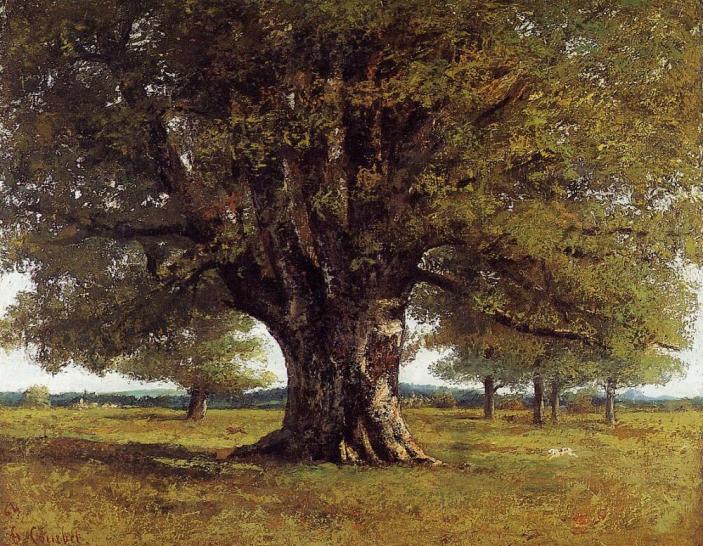
Fig. 64.2. Gustave Courbet, The Oak at Flagey, 1862, oil on canvas, Musée Courbet. Image source: Wikipedia.
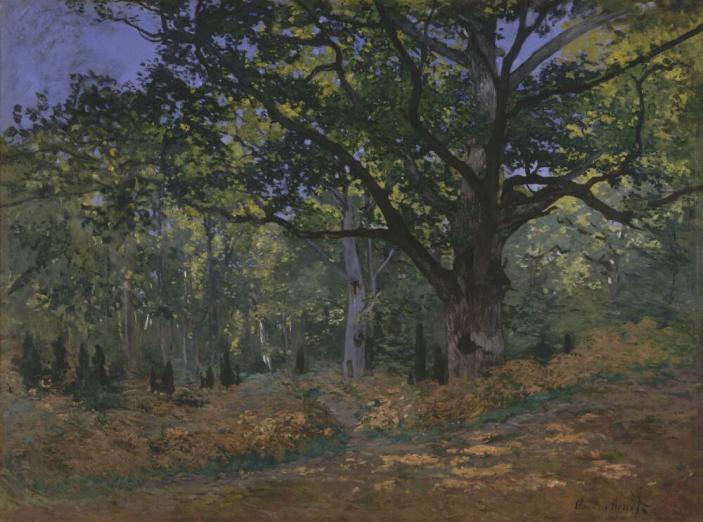
Fig. 64.3. Claude Monet, Bodmer Oak, Fontainebleau Forest, 1865, oil on canvas, The Metropolitan Museum of Art, New York. Gift of Sam Salz and Bequest of Julia W. Emmons, by exchange, 1964 (64.210). Image copyright © The Metropolitan Museum of Art. Image source: Art Resource, NY.
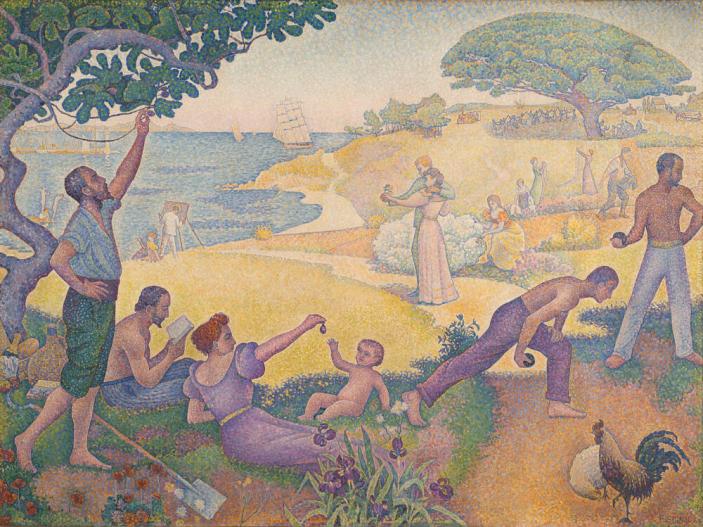
Fig. 64.4. Paul Signac, In the Time of Harmony, 1894‒95, oil on canvas, Montreuil, France, City Hall.
The Museum of Fine Arts, Houston, has made every effort to contact all copyright holders for images and objects reproduced in this online catalogue. If proper acknowledgment has not been made, please contact the Museum.